
1v1 Defending: First Contact
Defending is simple, but no one likes to do it.

Index:
Preface
Defending in Behind
Defending in Front - Correct
Defending in Front - Mistake
Conclusion
Afterword
Preface
Defenders are on the back foot because they cannot read the minds of the attacking team. The defending team can assume or anticipate an action, but not with certainty. I rewatched Liverpool vs Manchester City from 2023 to see the difference in attacker success when defenders make contact with the attackers and when they don’t.
I attached cues to specific moments that I noticed the defenders using to make a decision. These cues can be used to make contact with the attacker sooner, to give the defender an advantage in an otherwise uncertain situation.
Defending in Behind
Observe the right center-back for Liverpool, Joe Gomez. When Erling Haaland turns his hips to run in behind, so does Joe Gomez. As Haaland begins to accelerate, Gomez does the same, while also moving closer to Haaland.
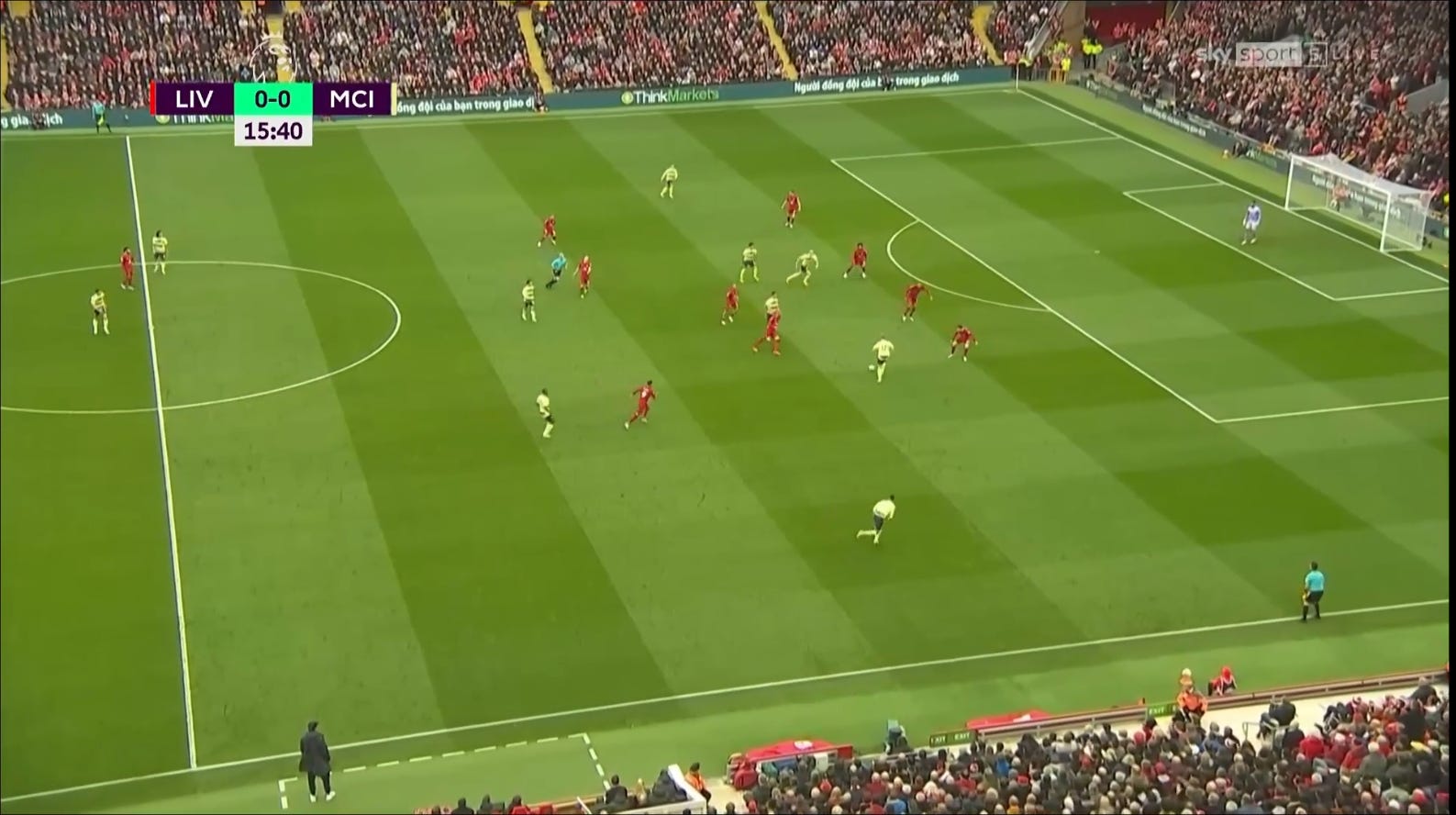
By timing the acceleration and turning of the hips correctly, Gomez is able to match Haaland’s acceleration with his own, while also making contact. By making contact with the attacker who is close to their top speed, the defender can unsettle the attacker, put them off balance, and force them into a position that causes them to control the ball incorrectly.
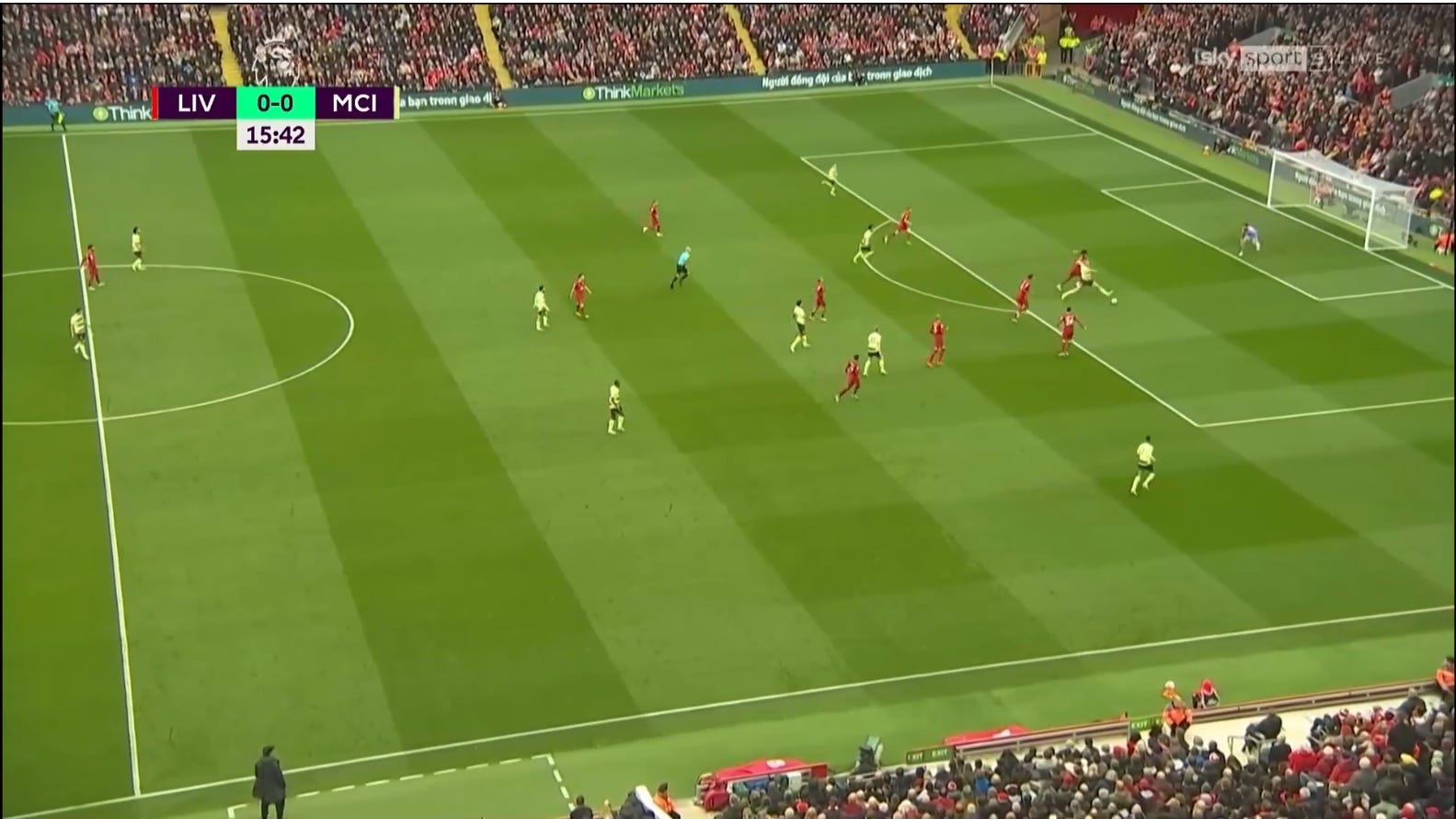
Time the turning of the hips and acceleration to two cues:
The wide attacker using the diagonal dribble to the center of the pitch (pic 1).
The second attacker turning their hips to run in behind.
If the center-back can identify or use one of these cues, they can defend the space in behind from the attacker.
Defending in Front - Correct
See the Manchester City right-back Manuel Akanji making contact with the Liverpool winger Diego Jota. Akanji jumped from his starting position to make contact with Jota before Jota received the ball.
This can be done by instructing the right-back to jump on to the winger when the winger makes eye contact with the player on the ball, or when the player with the ball has their hips facing the winger.
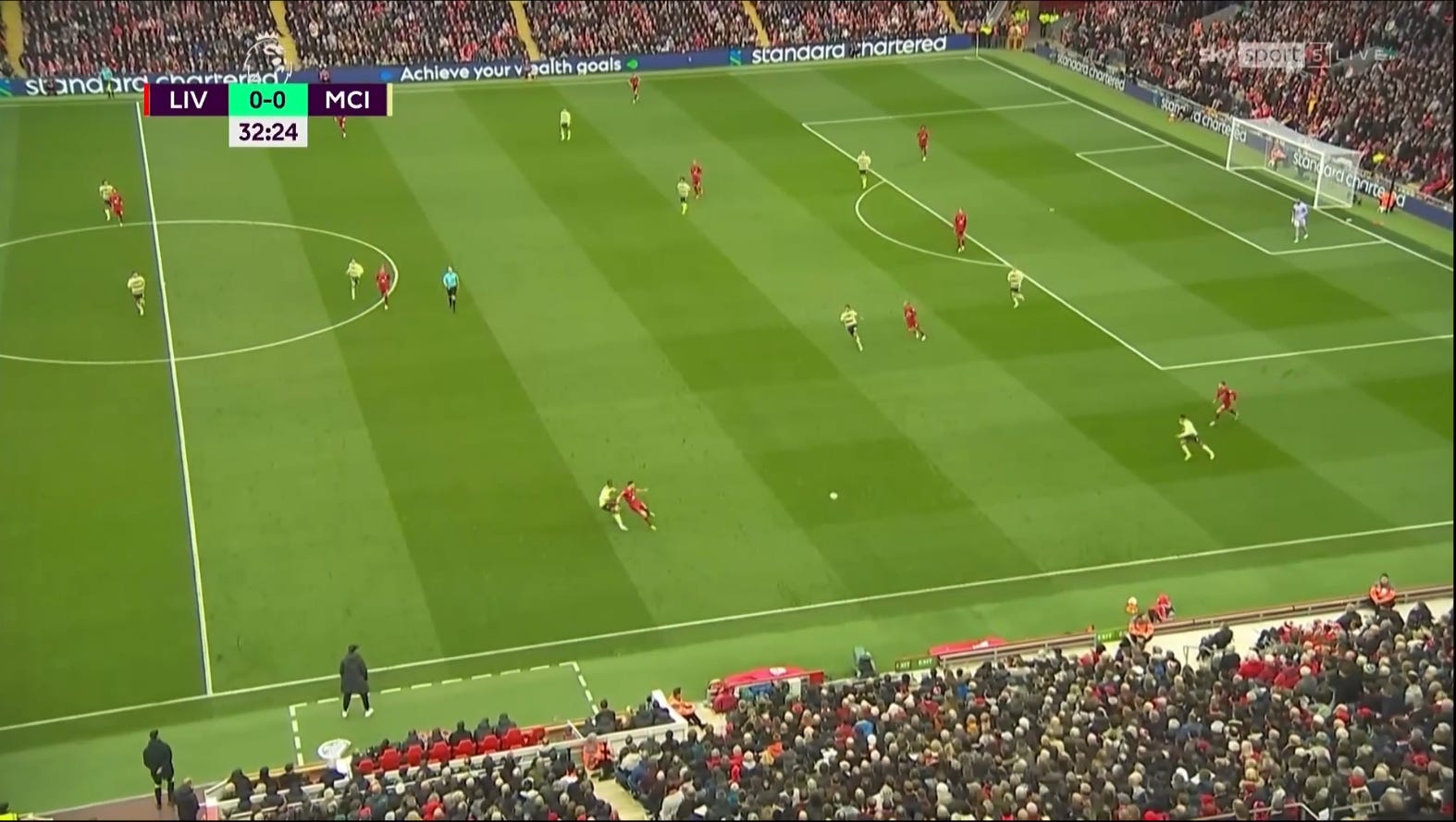
By making contact with the winger, Akanji is able to put him off balance, force him to make a poor first touch, and begin accelerating away from Jota, before Jota has recovered his balance.
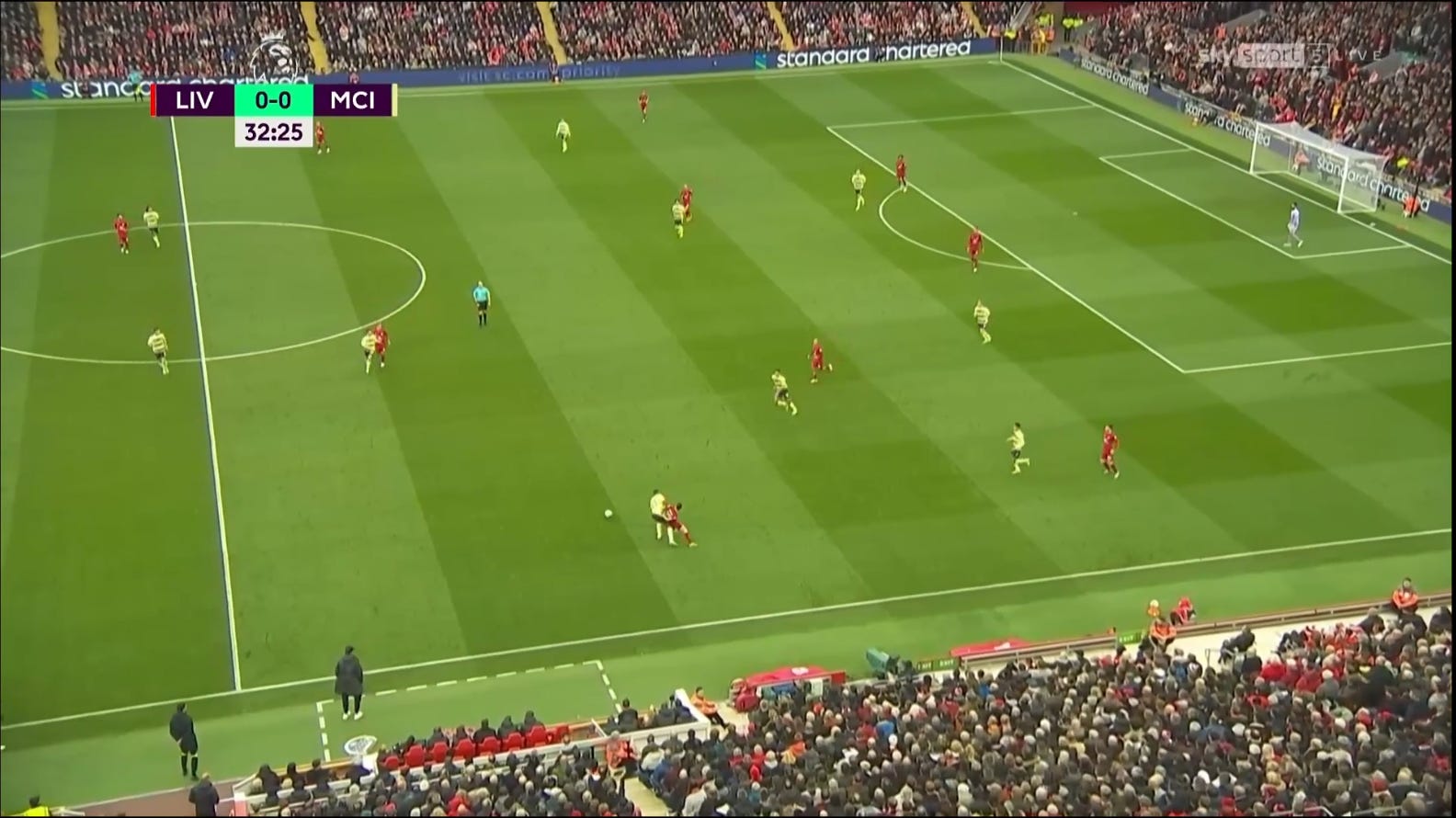
By making contact with the attacker, the defender can adjust the outcome of the attacker’s intention.
Jumping on the attacking winger can be done with two cues:
Eye contact from the attacker you are defending and the attacker with the ball.
The player with the ball turning their hips to the attacker you are defending.
Defending in Front - Mistake
Joe Gomez, the right center-back for Liverpool, does not make contact with Erling Haaland before he receives the ball. This half second of time allows for Haaland to adjust his balance, control the ball, and anticipate the contact from Gomez.
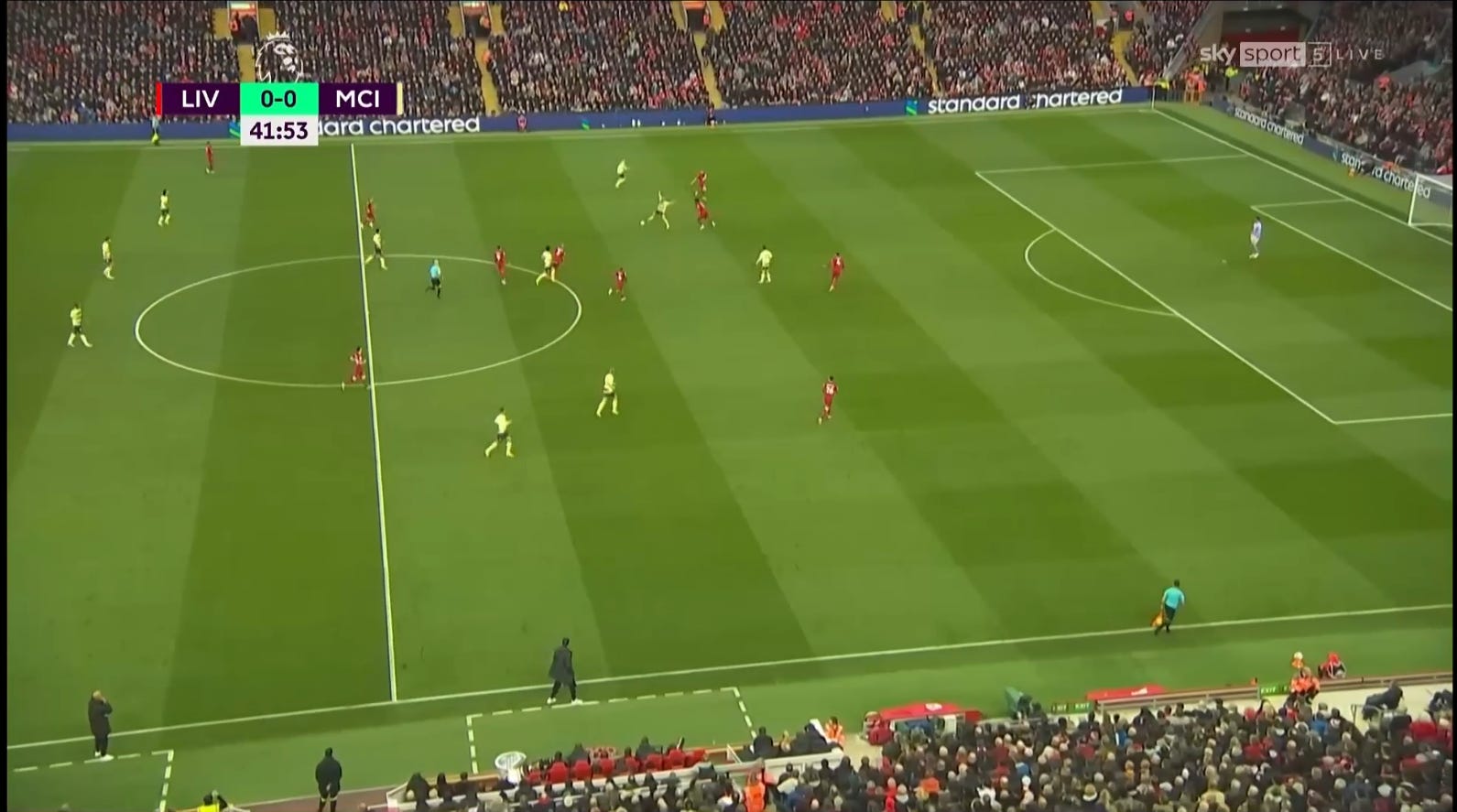
By turning and moving the ball with the foot closest to anticipated pressure, in this case, Haaland controlling the ball and turning with his left foot, as Gomez makes contact on Haaland’s left side, Haaland is able to shield the ball and turn.
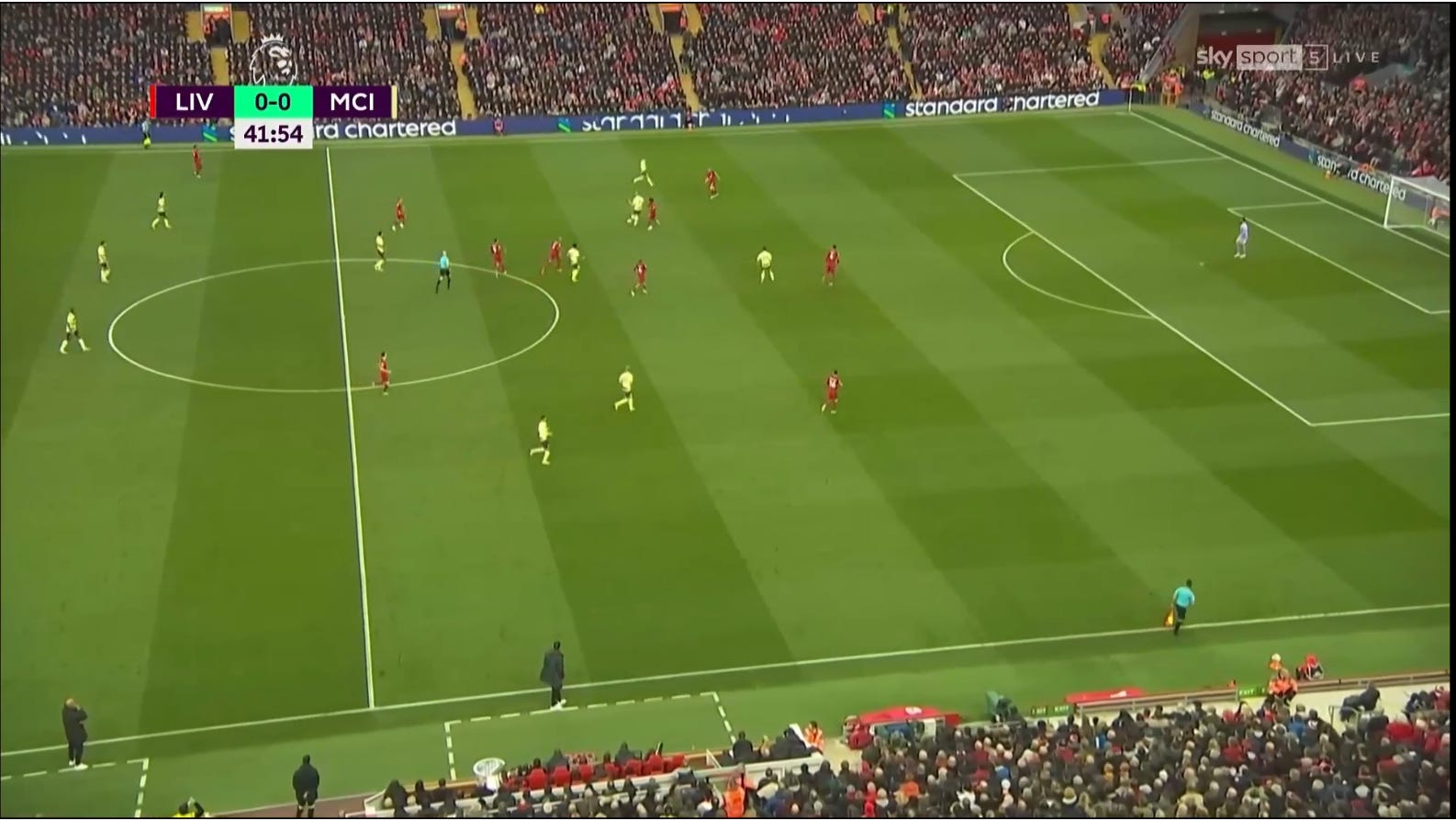
As Haaland turns and passes the ball, his next action is to run in behind. The action to pass the football and the action to sprint can happen simultaneously, as the stride Haaland takes when passing can begin his sprint in behind.
While this happens, Gomez begins to accelerate and has to decide between following Haaland or blocking the pass to the third attacker, running into the space behind him.
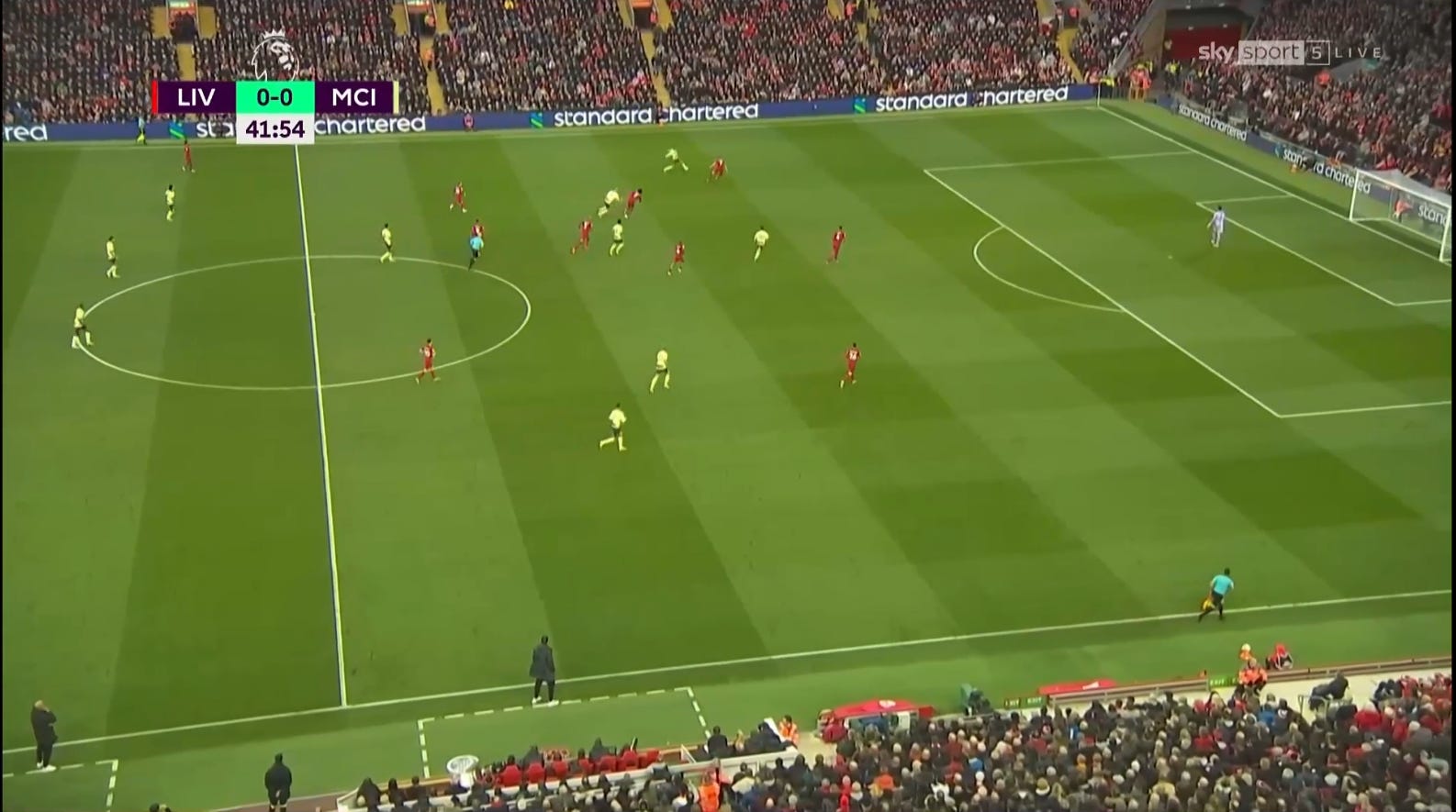
The cues Joe Gomez MISSED before making his decision to jump on Haaland:
Haaland making eye contact with the player with the ball.
The attacker with the ball turned their hips to face Haaland.
Haaland moving from as high as he could be, without being offside, to coming down to receive the ball.
Conclusion
All actions, not just defending ones, need cues and triggers for a decision to be made. If a defender has a cue to follow before making contact with the attacker, there is an objective way to determine if the defender, team and coach are aligned.
Afterword
I’m watching old football matches in my free time these days instead of using my phone. This is mostly because I want to improve in certain areas of my coaching, like 1v1 defending for example, while also spending my time doing things that are more fulfilling.
Message me on Substack, or, through Instagram and LinkedIn below.
WE ALL FUCKING LVOE LEEDS